What is Pediatric Occupational Therapy? Comprehensive Guide to Fine Motor Skills and Daily Independence (Pendik)
What is pediatric occupational therapy and how does it help children? Clinical guide for handwriting, shoe tying, fine motor coordination, and dyspraxia by Önce Özel Eğitim in Pendik.
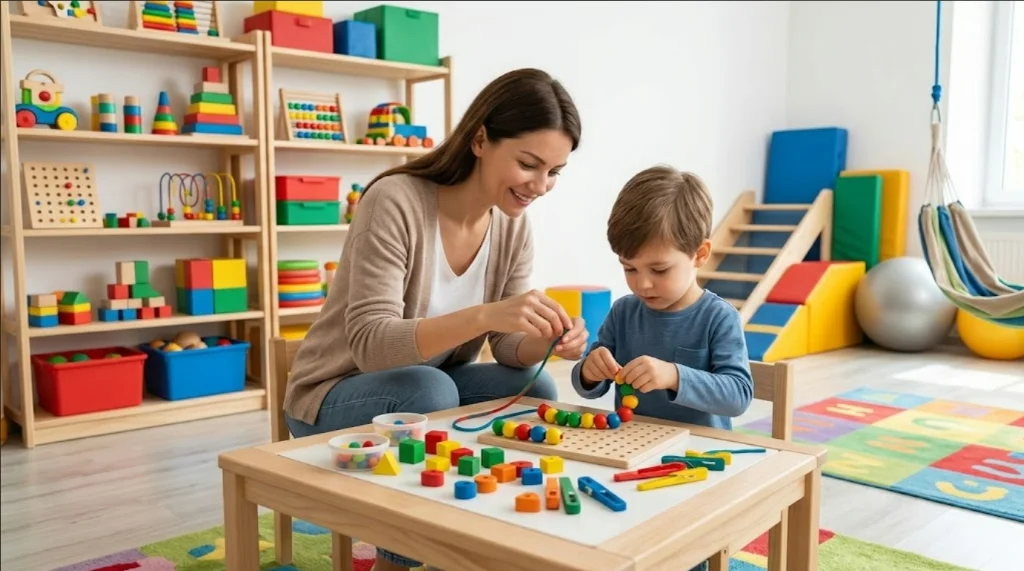
Does your child struggle immensely with buttoning their coat, pulling up zippers, or tying shoelaces? Do they drop forks and spoons, turning every meal into a messy frustration? When drawing or writing, do they press so hard that the paper tears, or conversely, produce strokes so faint they can barely be seen? Do they bump into doorframes, trip over their own feet, or hesitate nervously on stairs? Families and teachers frequently mislabel these struggles as "laziness", "clumsiness", or "carelessness". However, the neurodevelopmental reality is quite different: your child may require specialized pediatric occupational therapy (OT) support.
At Önce Özel Eğitim and Therapy Center in Pendik, Istanbul, our state-of-the-art pediatric occupational therapy clinic helps children master independence, fine motor coordination, and emotional resilience. In this comprehensive clinical guide, we explore pediatric occupational therapy, how it complements sensory integration, and the developmental milestones it restores.
What is Pediatric Occupational Therapy?
Occupational therapy is an evidence-based medical and rehabilitation discipline designed to empower individuals to participate independently and meaningfully in Activities of Daily Living (ADL). While an adult's "occupation" involves their career and household management, a child's fundamental occupations are playing, learning, dressing, and self-care.
A pediatric occupational therapist evaluates the child holistically—analyzing fine motor control, musculoskeletal strength, bilateral integration, sensory processing, and visual-perceptual skills. By designing customized, goal-oriented therapeutic activities, the therapist eliminates developmental barriers, allowing the child to thrive alongside peers at school, home, and the playground.
Sensory Integration vs. Occupational Therapy: What is the Difference?
Parents frequently ask how sensory integration differs from occupational therapy. Sensory integration is a specialized foundational branch of occupational therapy focused on helping the brain properly register and filter sensory inputs (balance, deep muscle pressure, touch). Occupational therapy builds directly upon this sensory foundation to produce functional real-world outputs: tying shoelaces, holding a pencil with dynamic precision, maneuvering scissors, using cutlery, and riding a bicycle.
In essence: sensory integration fortifies the neurological foundation, while occupational therapy builds the functional life skills upon that solid base.
4 Core Developmental Pillars of Pediatric Occupational Therapy
1. Fine Motor Precision and Hand Dexterity
Fine motor control governs the coordinated movement of tiny muscles in the fingers, hand, and wrist. In our Pendik clinic, sessions target:
- Mature pencil grasp development (transitioning from palmar grasp to a dynamic tripod grasp),
- Bilateral scissor cutting, paper folding, and geometric crafting,
- In-hand manipulation using tongs, tweezers, therapy putty, and beading,
- Handwriting remediation (dysgraphia): resolving legibility issues, letter reversals, and hand fatigue.
2. Independence in Activities of Daily Living (ADL)
A child's self-esteem is directly proportional to their self-reliance. Our therapists train children to master:
- Independent dressing: putting on shirts, pants, socks, and winter coats,
- Manipulating buttons, zippers, snaps, and buckles,
- Shoelace tying and shoe orientation,
- Mealtime independence: proper fork, spoon, and knife handling without spilling, drinking cleanly from open cups,
- Personal hygiene: independent handwashing, teeth brushing, and grooming routines.
3. Bilateral Coordination and Motor Planning (Dyspraxia)
Bilateral integration is the brain's ability to coordinate both sides of the body simultaneously (e.g., stabilizing paper with one hand while writing or cutting with the other). Children with dyspraxia (developmental coordination disorder) know what they want their bodies to do, but struggle with motor sequencing. Through structured therapeutic obstacle courses, we rebuild internal body schema and motor planning.
4. Visual-Motor and Spatial Perception
Visual perception enables children to interpret depth, orientation, and spatial relationships. Remediation addresses letter reversals (e.g., confusing 'b' and 'd'), difficulty keeping writing within notebook margins, spatial confusion in puzzles, and ball tracking.
Which Diagnoses Benefit Most from Pediatric Occupational Therapy?
- Autism Spectrum Disorder (ASD): Establishing self-help routines, adaptive play, and motor imitation.
- ADHD: Postural stability, desk endurance, impulse control, and fine motor precision.
- Cerebral Palsy and Neuromotor Disorders: Tone management, adaptive equipment training, and upper extremity functionality.
- Dyspraxia / Clumsy Child Syndrome: Balance, spatial navigation, and sports participation.
- Specific Learning Disorder (Dysgraphia): Overcoming handwriting fatigue and academic motor deficits.
Governmental Support (RAM Report) in Turkey
Children possessing an official ÇÖZGER medical report and a Counseling and Research Center (RAM) educational plan are entitled to fully subsidized, free occupational therapy and sensory integration sessions funded by the Ministry of National Education. Önce Özel Eğitim provides complimentary bureaucratic guidance to families throughout the hospital appointment and report evaluation process.
State-of-the-Art Clinic in Pendik: Access from Kartal, Maltepe, and Gebze
Our center in Pendik is equipped with international-standard vestibular swings, climbing structures, and fine motor workshops. Located within walking distance of the Marmaray high-speed train and the E-5 highway:
- Pendik, Kurtköy, and Kartal: 5–10 minutes,
- Maltepe, Kadıköy, and Tuzla: 15–20 minutes,
- Gebze, Darıca, and Çayırova: 15–25 minutes.
Empower Your Child's Independence Today
Mastering self-care and fine motor coordination during early childhood lays the foundation for lifelong academic success and emotional confidence.
Contact our Pendik clinic today to schedule a free initial occupational therapy and motor skill evaluation with our pediatric specialists.
Consult for Your Child's Development
Let us evaluate your child's developmental needs free of charge with our expert instructors and psychologists. You can contact us for any questions.
Consult via WhatsApp