What is Child-Centered Play Therapy? Expert Guide for Anger, Anxiety, and Behavioral Challenges (Pendik, Istanbul)
Discover what child-centered play therapy is, how it works, and which children benefit most. Expert clinical guide for anger tantrums, separation anxiety, and behavioral regulation by Önce Özel Eğitim in Pendik.
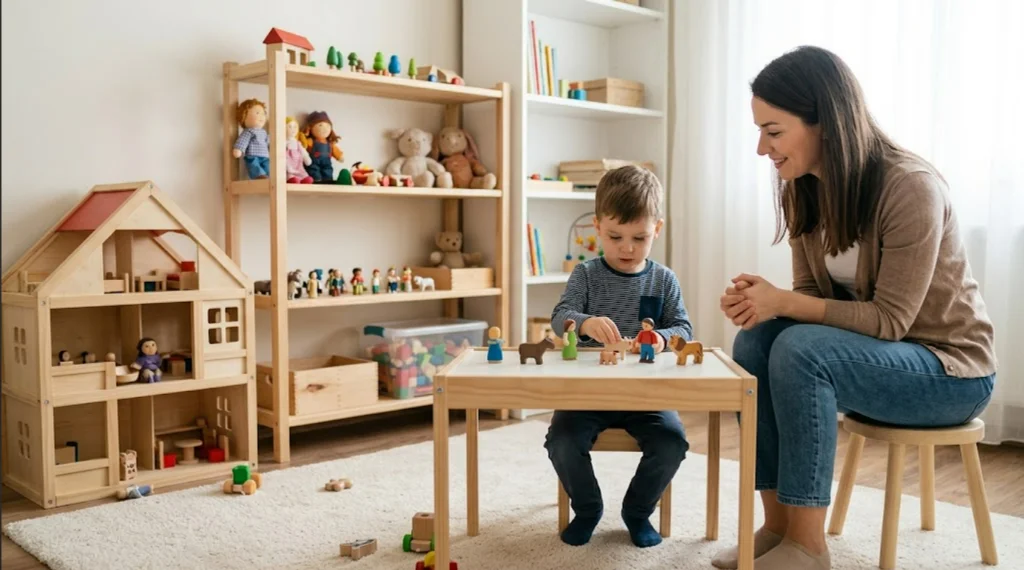
While adults can articulate distress, stress, and traumatic experiences through spoken words, children have not yet reached the cognitive maturity for abstract emotional verbalization. When you ask a distressed child "Why are you so angry?" or "Why are you biting your nails?", you will rarely receive a coherent answer. A child's inner psyche communicates not through logic, but through symbols. This is where the core philosophy of pediatric psychotherapy applies: "Play is the child's language, and toys are their words."
At Önce Özel Eğitim and Therapy Center in Pendik, Istanbul, our specialized pediatric psychology and child development department guides hundreds of children toward emotional equilibrium and calm. In this comprehensive guide, we examine what Child-Centered Play Therapy (CCPT) is, the behavioral challenges it resolves, and how the clinical process unfolds.
What is Child-Centered Play Therapy (CCPT)?
Developed in the mid-20th century from Carl Rogers' humanistic philosophy by Virginia Axline and expanded globally by Dr. Garry Landreth, Child-Centered Play Therapy is an evidence-based clinical modality. In this approach, the therapist is not an authoritarian director or advice-giver, but an empathetic companion who trusts unconditionally in the child's innate capacity for self-healing and emotional maturation.
Within a purposefully organized, emotionally safe playroom, the child freely projects suppressed fears, unexpressed rage, feelings of inadequacy, and traumatic experiences through symbolic play. Under the therapist's unconditional positive regard and warm boundary-setting, the child discharges accumulated tension, acquiring self-regulation, impulse control, problem-solving skills, and resilient self-esteem.
When Should Families Seek Child-Centered Play Therapy?
Play therapy is globally recognized as the gold standard intervention for children aged 2.5 to 12 experiencing emotional, social, and behavioral distress:
1. Severe Temper Tantrums, Meltdowns, and Aggression
When children throw themselves onto the floor, bite, hit, or destroy toys upon facing frustration, these reactions usually mask profound helplessness and fear of being misunderstood. By externalizing aggression onto safe play symbols, children learn to regulate emotional arousal constructively.
2. Sibling Rivalry and Developmental Regression
The arrival of a new sibling frequently triggers toileting accidents, thumb sucking, baby talk, clinging to the mother, and clandestine anger. Play therapy allows the firstborn to process fear of abandonment and safely rebuild emotional security.
3. Persistent Fears, Phobias, and Separation Anxiety (School Refusal)
Intense fear of darkness, inability to sleep alone, dread of loss, and hysterical crying at school drop-off stem from attachment insecurity. Play therapy reconstructs foundational safety from the inside out.
4. Psychosomatic Symptoms: Enuresis (Bedwetting), Encopresis, and Nail Biting
In the absence of physical medical causes, sudden bedwetting, stool withholding/soiling, compulsive nail biting, hair pulling, or facial tics represent physical manifestations of psychological stress. Once internal tension is resolved through play, somatic symptoms subside naturally.
5. Traumatic Events: Parental Divorce, Grief, Accidents, and Hospitalizations
Marital separation, loss of a loved one, severe illness, or medical trauma shatter a child's sense of predictability. Children neutralize trauma by restaging and transforming painful experiences with toys until resolution is achieved.
How is the Önce Özel Eğitim Playroom Structured?
Our dedicated playroom in Pendik is not an ordinary nursery or playground. Every item is clinically curated to allow children to project core psychological themes:
- Real-Life & Nurturing Items: Baby dolls, bottles, medical kits, domestic furniture, and kitchen utensils (attachment, family dynamics, care).
- Emotional & Aggressive Release Items: Predatory animal figures, foam swords, handcuffs, soldiers, bop bags (boundary testing, anger discharge).
- Fear & Mastery Items: Snakes, monsters, dragons, masks, and dark discovery boxes (confronting deep-seated fears with mastery).
- Expressive Art & Sensory Media: Kinetic sand trays, non-toxic finger paints, modeling clay (tactile grounding and emotional relaxation).
Parental Consultation and Collaborative Guidance
Play therapy is never an isolated process confined to the playroom. Every 3 to 4 sessions, our clinical child psychologist conducts structured parental guidance sessions. We decode the themes revealed in the playroom, equipping parents with therapeutic home communication tools—including dedicated special play times, reflective listening, and compassionate limit setting.
Pediatric Clinic in Pendik: Seamless Access from Kartal, Tuzla, and Gebze
Therapeutic success requires consistent attendance without travel stress. Önce Özel Eğitim is located in central Pendik, within walking distance of the Marmaray station, the E-5 highway, and regional transit lines:
- Pendik & Kurtköy: 5–10 minutes,
- Kartal & Maltepe: 10–15 minutes via Marmaray or metro,
- Tuzla, Çayırova, Darıca & Gebze: Direct, congestion-free highway access.
Schedule a Free Initial Pediatric Evaluation
Behavioral challenges are your child's way of signaling "I need help, but I cannot explain it in adult words." Early intervention prevents emotional struggles from turning into academic deficits.
Contact our Pendik clinic today to schedule a free initial clinical evaluation with our child psychologists and tour our specialized therapy suites.
Consult for Your Child's Development
Let us evaluate your child's developmental needs free of charge with our expert instructors and psychologists. You can contact us for any questions.
Consult via WhatsApp